
How to Become a Close Protection Officer, Steps and Skills
Many people search for how to become close protection officer because the role looks prestigious from the outside. In reality, it is a regulated profession built on planning, discretion and calm judgement long before anyone sees a suit and an earpiece. In the United Kingdom, the route is clearly defined by the Security Industry Authority (SIA), which makes it a useful benchmark wherever you plan to work. This guide explains the training pathway, the licence, the skills high level clients expect, and the mistakes that slow down most beginners.
At IPS BODYGUARD, we design and manage protective operations in more than 100 countries. We review profiles, assess skills and support security professionals through career coaching. The advice below reflects what we see in the field, not what a brochure promises.
How to Become a Close Protection Officer, Steps and Skills
About an 11 minute read
What a close protection officer actually does
A close protection officer, also called a close protection operative or bodyguard, protects one or more individuals from assault, abduction, harassment and other threats. Under the Private Security Industry Act 2001, close protection is defined as guarding individuals against assault or injuries that might result from the unlawful conduct of others. That definition matters, because it explains why the activity is licensed in the UK.
Planning and advance work
The visible part of the job, escorting a client from a car to a venue, is only a fraction of the work. Most of the effort happens beforehand, with threat and risk assessment, route and venue planning, and advance work to check entrances, exits, hospitals and potential pressure points.
Once a mission starts, the officer manages protective movements and team formations, maintains surveillance awareness, liaises with drivers, venue staff and emergency services, and writes incident reports afterwards. If you want a deeper view of preparation, our article on advance work in close protection explains why it decides the outcome of most missions.
How to become a close protection officer in the UK, step by step
The UK National Careers Service, Careers Wales and GOV.UK guidance describe a consistent pathway. Here is the sequence most candidates follow:

Step-by-step training pathway
Check your eligibility, starting with the minimum age of 18 and your ability to pass identity and criminal record checks.
Obtain a valid first aid qualification, normally Level 3 or higher, with at least 12 months of validity remaining when your close protection course begins.
Complete the Level 3 Certificate for Close Protection Operatives Working in the Private Security Industry with an approved training provider.
Apply online for a front line SIA close protection licence, providing identity documents, address history and any overseas criminal record checks.
Build experience and add specialist skills such as defensive driving, trauma response and hostile environment awareness.
Step | Focus |
1. Check eligibility | Confirm minimum age and ability to pass identity and criminal record checks. |
2. First aid qualification | Obtain a valid Level 3 or higher first aid qualification with at least 12 months of validity remaining. |
3. Close protection training | Complete the Level 3 Certificate for Close Protection Operatives with an approved provider. |
4. Apply for SIA licence | Submit your online SIA application with supporting documents and fees. |
5. Build experience and skills | Gain practical experience and add specialist skills such as defensive driving, trauma response and hostile environment awareness. |
Each step depends on the previous one. Skipping or rushing the first aid requirement, for example, can prevent you from starting the Level 3 close protection course at all.
Close protection officer requirements and the SIA licence
Do you need an SIA licence to work in close protection? If you carry out licensable close protection activity in the UK, yes. The SIA close protection licence is a front line licence, and working without one where it is required is an offence under the Private Security Industry Act 2001. Close protection operative also appears on the UK Regulated Professions Register, which confirms its status as a regulated activity.
SIA licence application process
To apply, you create an online SIA account, submit your application, provide proof of identity and address, and pay the licence fee unless an employer covers it. The SIA then carries out identity and criminal record checks. If you have lived or worked abroad, you may need an official overseas criminal record check that the SIA can verify, and incomplete documentation is one of the most common causes of delay.
Before applying, you must hold a recognised licence linked qualification. For close protection, this is the Level 3 Certificate for Close Protection Operatives Working in the Private Security Industry. Course content typically covers the roles and responsibilities of operatives, threat assessment and risk management, surveillance awareness, route and venue planning, search procedures, team formations, conflict management, emergency procedures and evacuation, communications and medical response. Many courses also include practical exercises on foot drills, vehicle movements and venue security.
The first aid prerequisite deserves attention. Official guidance cites qualifications such as Level 3 First Aid at Work, First Person on Scene (FPOS) and First Response Emergency Care. The requirement exists because an officer may be the first person to manage bleeding, collapse or trauma during an incident.
Important
A close protection qualification obtained more than three years before your application may not be accepted for a first licence, or after a long period without an active licence. In that case, the SIA may require the full qualification again along with the Level 2 Award for Close Protection Operatives (Refresher), so always check current GOV.UK guidance before booking.
Do you need military or police experience to be a bodyguard?
This is one of the most frequent questions we receive. The short answer is no, not as a legal condition. The official licensing route is based on age, training, eligibility checks and the licence linked qualification, not on a military or police career.
The practical answer is more nuanced. Careers Wales notes that many employers expect previous experience in the military, police, security industry or emergency services. Career changers can enter the profession, but they need to compensate for limited operational exposure. Useful bridges include security guarding, event security, stewarding and access control, emergency response training, and documented experience of incident management. Professional references from these roles carry real weight.
Veterans and former police officers also face an adjustment. Private close protection relies on low profile protection, client service and diplomacy. A protective posture that works in uniform can feel intrusive to a chief executive or a family on holiday. Our article on how discreet bodyguard services work describes the standard clients now expect.
The close protection officer skills clients really value
A licence proves that you meet the legal minimum. It does not prove you are ready for demanding assignments. The National Careers Service lists fitness, first aid, background checks, an SIA licence and a full driving licence among relevant requirements. Beyond that, the profiles we see succeed tend to combine several qualities.
Core professional skills
Physical fitness and stamina matter, because days can be long and irregular. Calm decision making under pressure and emotional control are essential, since the best outcome is usually the incident that never escalates. Conflict management and de-escalation skills therefore matter more than physical confrontation. Clear written and verbal communication allows you to brief a team, report an incident accurately and reassure a client without alarming them.
Client confidentiality and discretion are non negotiable. Officers see private family life, business negotiations and personal routines. A single careless conversation or social media post can end a career. Professional appearance, cultural awareness and the ability to blend into very different environments, from a board meeting to a beach club, are also part of the job.
Good to know
Languages are a genuine differentiator for international work. Fluency in French, Arabic, Russian, Spanish or Mandarin can make a profile far more useful on assignments on the French Riviera, in the Gulf or in Asia.
Adding specialist skills to your profile
Once licensed, you can strengthen your profile with additional training. These courses do not replace the mandatory licence linked qualification, but they show that you understand the realities of executive protection work. Valuable areas include advanced or defensive driving, countersurveillance, trauma and medical response beyond the basic first aid requirement, hostile environment awareness, maritime security for yacht assignments, digital privacy awareness, and security management.
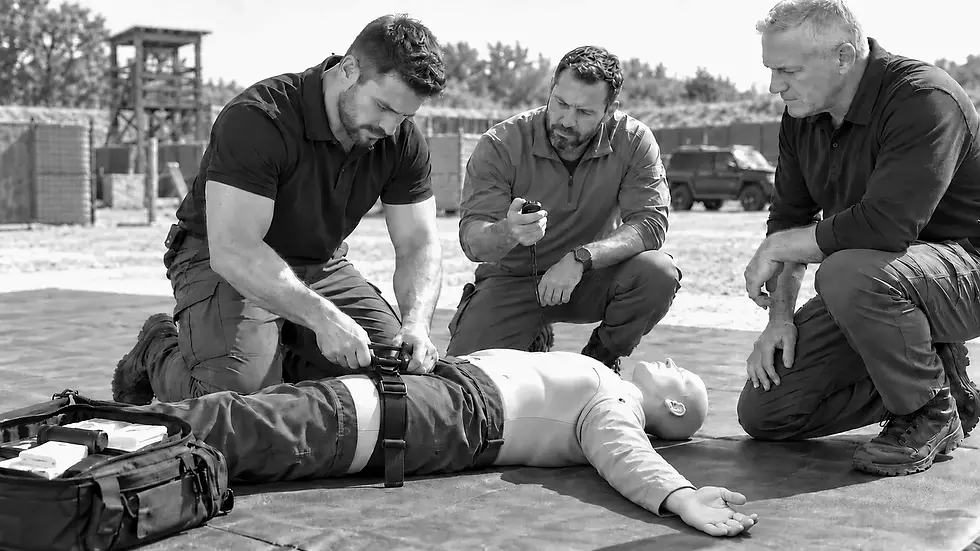
Driving deserves special attention. Many assignments combine protection and secure transportation, so a full driving licence and a defensive driving qualification significantly widen your options. Digital awareness is equally relevant today, because many clients face exposure through social media, leaked addresses and online tracking. Our pages on hostile environment awareness training and cyber security and digital awareness outline the topics high level clients expect professionals to understand.
Thinking beyond the UK
The SIA framework is a solid benchmark, but it does not automatically authorise you to work abroad. Each country sets its own rules, which may involve a national security licence, local registration, specific permits or restrictions on carrying equipment.
This is precisely how we approach international missions at IPS BODYGUARD. We design tailored security solutions and manage protective operations so that each team complies with local law while working to one consistent standard. For an aspiring officer, the lesson is simple. International work rewards those who understand compliance, cultural codes and teamwork across nationalities, not only physical capability.
How to find your first close protection job after getting licensed
Once licensed, you can apply to specialist protection providers, corporate security departments, event security organisations and recruitment agencies that focus on the sector. The National Careers Service confirms that licensed bodyguards often apply directly to organisations or work through specialist agencies. Professional networking and referrals remain the most powerful channel, because trust is at the heart of this profession.

Close protection jobs for beginners rarely start with a long executive protection contract. Typical entry points include event and public appearance support, residential security, hotel and travel security, security driving and support roles within a larger detail. Early work is often freelance and contract based, with irregular schedules.
Treat each assignment as an audition. Punctuality, clean reporting and discretion are what lead to the next call. Understanding how a team is organised helps you fit in quickly, and our guide to the five roles in a close protection detail is a good starting point.
If you want structured guidance on your next step, our security career coaching helps professionals assess their profile, identify gaps and understand what international clients expect.
Mistakes to avoid when starting out
The first mistake is choosing a course only on price. The key questions are whether the provider is approved, whether the qualification title matches current SIA requirements, and whether practical components and assessments are properly delivered. Verify the qualification with the awarding organisation before paying.
The second mistake is confusing a short executive protection training course with the mandatory qualification. Some short courses are useful, but they may not satisfy the licence linked requirement. The third is ignoring the first aid validity rule, which can block your enrolment. The fourth is underestimating background checks, particularly overseas records. The last, and most common, is expecting premium assignments immediately. Reputation in close protection is built one discreet, well executed mission at a time.
Next steps on your close protection career
Learning how to become a close protection officer means following a clear regulatory path. Be at least 18, secure a valid first aid qualification, complete the Level 3 close protection course with an approved training provider, and obtain your SIA licence. What turns a licence holder into a trusted professional is everything that follows, field experience, specialist skills, languages, discretion and the ability to plan before acting. If you want an experienced perspective on your career path, our consulting and training team can help you structure the next stage.
FAQ
What is the minimum age to become a close protection officer?
In the UK, you must be at least 18 years old to hold an SIA licence and work as a close protection operative. Some clients and providers prefer candidates with additional life and professional experience.
Is a full driving licence necessary?
It is not part of the SIA licence itself, but the National Careers Service lists a full driving licence among relevant requirements for bodyguard work. In practice, many assignments involve vehicle movements, so it is strongly recommended.
Is there a difference between a bodyguard and a close protection officer?
The terms are often used interchangeably, but close protection officer usually describes a trained professional working within a structured, planned protective operation. Our article on the difference between a bodyguard and a close protection officer explores the distinction.
Does a UK SIA licence let me work in other countries?
No, it applies to licensable activity in the UK. Other countries have their own licensing and permit systems, and each mission must comply with local rules.
Where can I check official requirements?
The most reliable sources are GOV.UK guidance on SIA licensing and training, the National Careers Service bodyguard profile and Careers Wales. Requirements can change, so always check them before booking a course or submitting an application.


Comments