
Terrorism in France: A Security Overview of the 2014-2018 Threat Cycle
- May 4
- 2 min read
Updated: May 5
Terrorism in France: A Security Overview of the 2014-2018 Threat Cycle
In 2015, in the heart of Paris, France was reminded that it could be targeted by coordinated, simultaneous terrorist attacks. Since then, completed and disrupted attack plots have affected French territory, wider Europe, and French interests abroad.
On 12 May 2018, Paris was once again struck by a knife attack that left one person dead and four others injured.
Looking back at five years of terrorism in France 2014-2018: four years of sustained terrorist threat
This attack occurred while France was still operating under a persistent terrorist threat. The previous fatal attack, on 23 March 2018 in Carcassonne and Trèbes, in the Aude department, had brought the number of people killed in terrorist attacks on French soil since 2015 to 245.
Since the beginning of the Syrian uprising in March 2011, French counterterrorism services had identified no fewer than 78 planned attacks in mainland France. Of these 78 plots, 50 were disrupted, 17 failed, and 11 were carried out.
Law enforcement as a primary target, civilians bearing the heaviest human cost
Among the 28 failed or completed attacks, law enforcement remained a primary target, with 19 incidents. Eleven targeted civilians, while four targeted religious communities. However, the casualty figures from completed attacks reveal a different and far more severe reality: of the 245 people killed, 233 were civilians.
Terrorist organisations have often framed these attacks as retaliation for France's military operations and its role within the international coalition. Yet beyond the targeting of law enforcement, many attacks struck mixed, diverse and often young civilian populations in public spaces and entertainment venues.
A threat landscape that has shifted
The most recent attacks carried out on French soil during this period were largely isolated acts committed by individuals already residing in France. This reflected a broader shift in the terrorist threat landscape, both in France and across Europe, making attack planning harder to detect and prevention more complex.
The threat was no longer only external. It had become more diffuse, more localised and more difficult to anticipate, combining domestic radicalisation with international ideological influence.
To address this evolving threat, French authorities sought to identify individuals at varying levels of radicalisation. At the time, around 20,000 individuals were reportedly monitored in France, including 323 jihadists who had returned from Syria or Iraq.
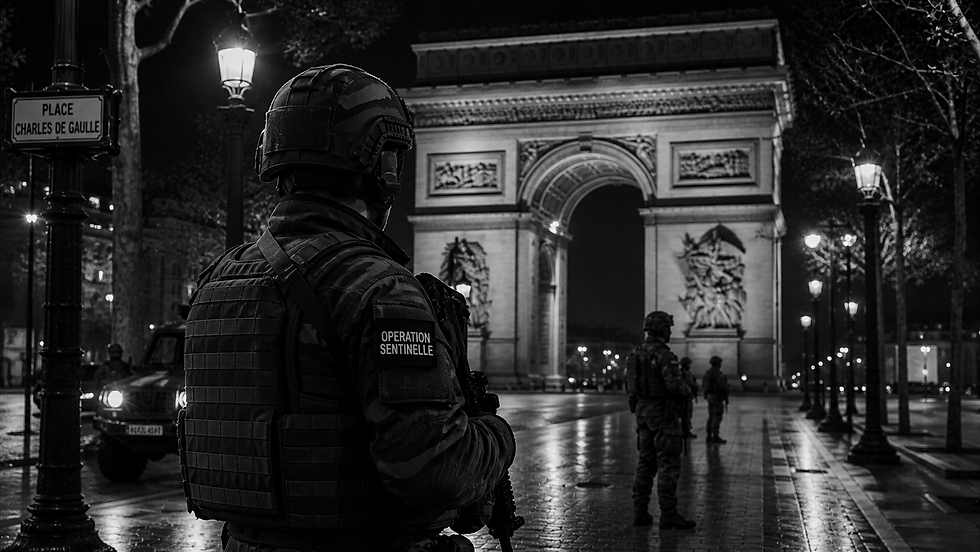
State-level security responses included the declaration of a state of emergency and the deployment of Operation Sentinelle, mobilising approximately 7,000 soldiers as part of the Vigipirate national security plan.
For private clients, executives, organisations and high-profile individuals, this period illustrates the importance of structured risk analysis, local intelligence and proportionate security planning. In a changing threat environment, effective protection depends not only on physical security, but also on anticipation, situational awareness and disciplined operational coordination.


Comments